Most people pick a massage the way they pick a seat on a train: whatever is nearest. But bodywork traditions evolved to solve different problems. Here is the honest, no-mystique version of what each one does, what it feels like, and when it is the right call.
Swedish: when you need to come down
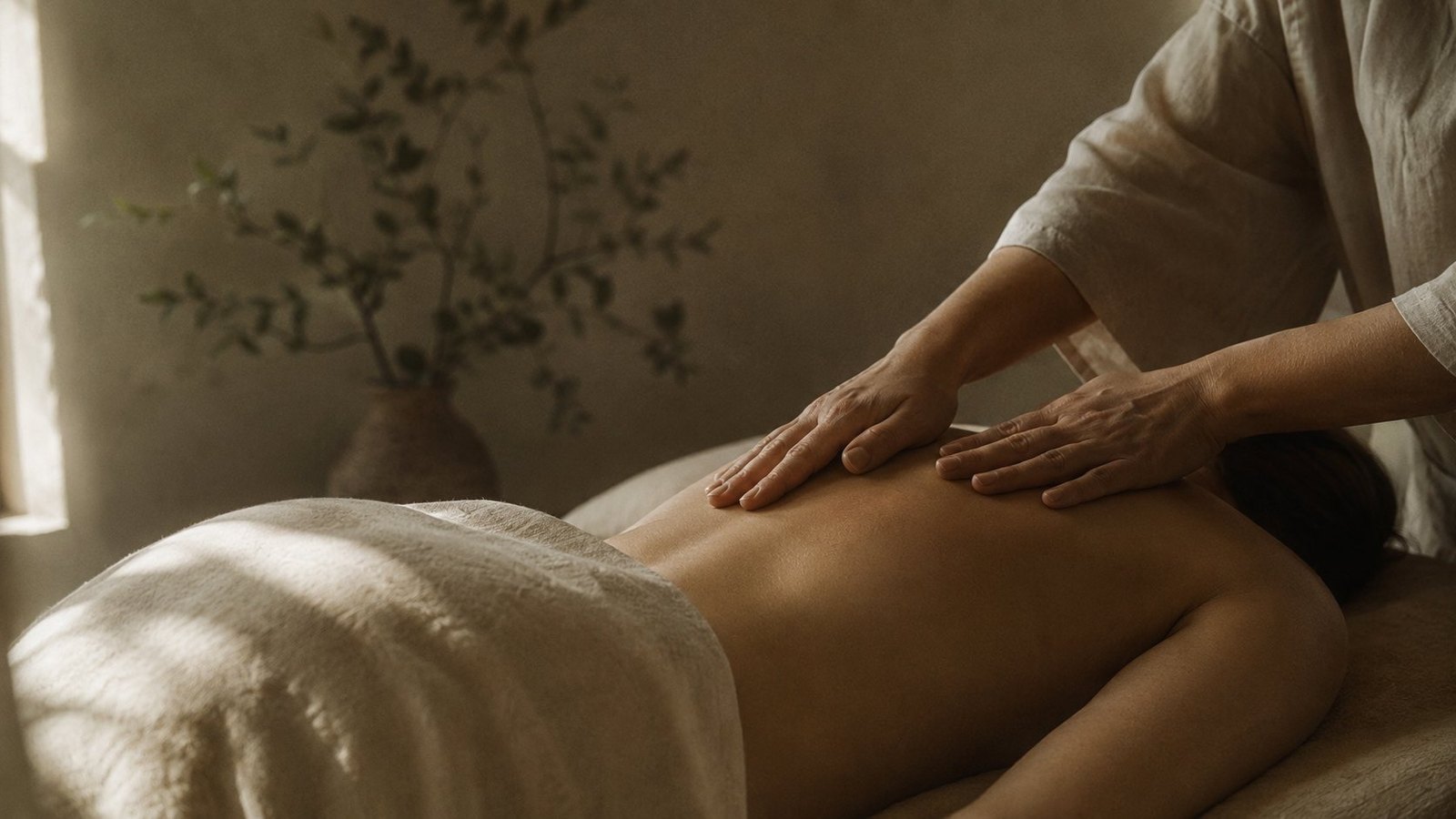
The default of western spas: long, gliding strokes with oil, moderate pressure, usually on a heated table. Swedish massage is less about fixing a specific muscle and more about switching your nervous system from alert to rest. Blood pressure eases, breath slows, and most people drift somewhere near sleep.
Deep tissue: when something is knotted
Slow, deliberate pressure that works through the surface layers into the muscle beneath, elbows and forearms included. Good deep tissue work is not simply “hard”; it is specific, finding the exact band of tissue that has shortened from months of desks, screens and stress, and convincing it to let go. Expect some discomfort during, mild soreness for a day after, and a distinct new range of motion.
Thai: when you feel stiff and stuck
No oil, no table; you stay clothed on a floor mat while the therapist uses hands, knees and body weight to stretch you through positions you would never reach alone. Part massage, part assisted yoga. It is rhythmic, sometimes acrobatic, and you leave feeling taller and strangely energized rather than sleepy.
Lymphatic drainage: when you feel puffy and heavy
The gentlest technique on this list, and the most misunderstood. Feather-light, rhythmic strokes follow the lymphatic system to help the body move retained fluid. It will not touch a muscle knot; that is not its job. People seek it out after flights, before and after events, post-surgery (with a doctor's clearance), or whenever the body feels swollen and sluggish rather than sore.
Sports massage: when training is the problem
A toolbox rather than a single technique: deep work, stretching, and friction applied with an athlete's logic. Before events to prepare tissue, after to speed recovery, and between to keep small irritations from becoming injuries. The therapist should ask about your training; if they don't, you're getting deep tissue with a different name.
How to choose, in one breath
Say how you feel, not which menu item you want. Wired and exhausted: Swedish. One specific knot: deep tissue. Stiff everywhere: Thai. Puffy and heavy: lymphatic. Sore from training: sports. The best places will adjust on the table anyway; the point is to arrive at the right kind of table to begin with.
One honest caveat: massage is care, not medicine. Persistent pain, numbness or injury deserve a clinician's eyes before a therapist's hands.
Quick answers
Which massage is best for knots in your shoulders? Deep tissue: slow, specific pressure that releases what desk work tightened. Expect a day of mild soreness, then freedom.
What helps with swelling or puffiness after a flight? Lymphatic drainage: light, rhythmic strokes that move retained fluid. Wrong tool for knots, exactly right for heaviness.
Thai or deep tissue for stiffness? Thai for whole-body, rusted-hinge stiffness; deep tissue when one spot is the problem.
For stress and bad sleep? Swedish. Its entire job is moving your nervous system from alert to rest.
Say it the way you'd tell a friend.
“Knotted shoulders, can't sleep” is a perfectly good search. We'll find the quiet, excellent places near you, ranked by the people who love them.